

HOW DECARBONIZATION HELPS MINERS RECRUIT NEW TALENT
Mark Agnor-Shutterstock
The mining industry faces a generational challenge. Older generations of leaders are retiring at the same time as there is a shortage of new entrants, leaving companies struggling to backfill critical roles just as demand for minerals increases. The problem is particularly acute with entry‑level and early‑career positions, where a 63% decrease in mining graduates from 2014 to 2020 in Australia and a 39% decline in the United States has contributed to a shrinking pipeline into professional and leadership roles.
Moreover, an article by Mongabay notes that “70% of respondents aged 15–30 years old said they definitely or probably wouldn’t work in mining,” while more than 70% of mining executives say talent shortages are constraining their ability to meet production and strategic goals. A growing body of work suggests that stronger ESG performance and accelerated decarbonization, particularly through renewables, can mitigate younger workers’ reluctance to consider mining careers.
Recruiting rides on reputation
Recent analyses describe a structural mismatch between what Gen Z expects from employers and how it perceives mining. The OECD’s Mining for talent: Addressing regional workforce challenges in a changing resources industry finds that workforce gaps arise not only from skills availability but also from “the attractiveness of the sector and regions where it exists,” highlighting image and place‑based factors alongside demographics. In Mining industry touts green pledges to attract talent, but Gen Z isn’t buying it, Mongabay concludes that “what’s holding potential workers back, particularly Gen Z, is their commitment to higher environmental and social standards,” which many do not see reflected in mining’s track record.
Cross‑sector surveys such as Deloitte’s work on Gen Z and sustainability indicate that large majorities of young respondents consider environmental performance and social impact important when choosing employers, and a significant share will reject or leave roles when these expectations are not met. A 2022 survey by BDO, quoted in the Mongabay piece, reports that 66% of Gen Z respondents considered “positively impacting local communities” important, and 59% said the same for positively impacting the environment.” Together, these findings suggest that perceived misalignment between mining’s ESG record and Gen Z’s values is a central barrier to recruitment.
The changing nature of mining work
On a more positive note, several reports link decarbonization to changes in both the technical content and perceived attractiveness of mining jobs. PwC’s Mine 2025: Concentrating on the future states that “a substantial portion of traditional mining jobs will be augmented or replaced by technology—with remote operations employing data scientists, AI and specialists to complement field labour.” This increased use of technology “will all make mining more appealing to a younger and more diverse workforce.” The same report expects automation, remote operations and electrification to create new, higher‑skilled roles that will be increasingly important in 21st-century mining and also and more aligned with the high‑tech professional identity that younger workers embrace.
The OECD links the energy transition to new labour‑market demands, noting that rapid growth in critical minerals and low‑carbon technologies is “transforming job requirements and regional economies” and generating demand for competencies in digitalization and environmental performance. Large‑scale investments in on‑site solar and wind, storage, fleet electrification and process efficiency are emblematic of decarbonization pathways that require new technical and managerial skills. These developments can create career opportunities at the intersection of mining, renewables and data analytics, which align more closely with Gen Z graduates’ interests than traditional extraction‑only roles.
Building new career pathways
In Who will do the work?, the Swedish engineering company Sandvik emphasizes that attracting young professionals will depend on demonstrating “structured development paths” into responsible roles that connect everyday tasks to broader goals around safety, sustainability and innovation. Titan Recruitment’s Future‑Ready: How to Attract Gen‑Z to the Mining Jobs recommends making cutting‑edge technologies like autonomous haulage, AI‑driven maintenance, remote operations, and renewables projects visible elements of graduate and apprenticeship programs.
Globe 24‑7’s Gen Z doesn’t want to work in mining: It’s time to change that frames the issue as a long‑term pipeline problem and argues for early‑career hiring, education partnerships and community‑based talent funnels designed over a 10‑ to 20‑year horizon. In this context, decarbonization projects and ESG initiatives are presented as platforms through which young employees can gain cross‑functional experience and see a path from entry‑level roles into future leadership in a transforming industry.
The reluctance of Gen Z candidates to pursue mining careers seems closely tied to concerns about environmental and social performance, as well as to outdated perceptions of the work itself. However, credible ESG integration and accelerated decarbonization—particularly through the adoption of renewables, electrification and nature‑positive practices—can help reposition mining as both a high‑tech and values‑aligned field. Mines that demonstrate real progress on emissions and community outcomes and embed these themes into early‑career roles and leadership pathways are more likely to attract and retain the next generation of workers and leaders needed to sustain the sector in a net‑zero world.
ROUND-THE-CLOCK CLEAN HEAT AND POWER
WITH NO ADDITIONAL CAPITAL COST
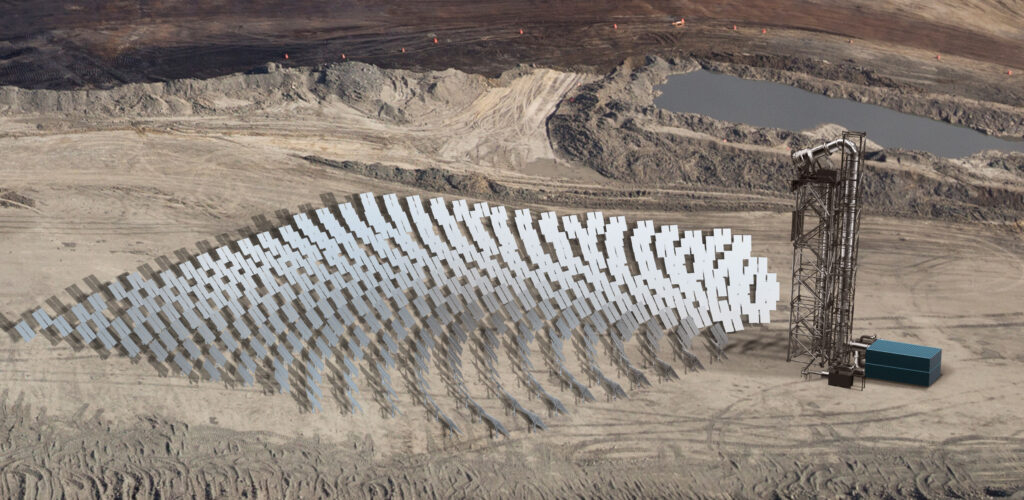
247Solar builds, owns and operates our hybrid solutions and sells round-the-clock clean heat and power on a PPA basis. Mines pay only for the energy they use with no additional capital cost and no risk.
We remove the burden of ownership by assuming all responsibility for operations, maintenance, insurance and repair. We guarantee energy delivery – redundant systems ensure reliability and eliminate the need for gensets.
Here’s what that means for miners:
- Reduced energy costs by 25% or more
- Stable, predictable energy prices for decades
- Lower operating costs per ton
- Increased competitiveness
- Longer life-of-mine
Get in touch to learn more
FORTESCUE’S FORREST SAYS REAL ZERO IS THE GOAL
Fortescue
Fortescue’s Andrew Forrest says there is a compelling business case for the concept of Real Zero – completely eliminating fossil fuels instead of compensating for them with offsets, CO2 removal or carbon capture and storage.
As reported by Sophie Vorath in Renew Economy, a series of reports commissioned by Fortescue show that “real zero” is both technically feasible and economically preferable to “net zero” in numerous hard-to-abate sectors.
Vorath writes that Forrest’s company has already committed $6.2 billion to a plan to achieve real zero by 2030. “This means decarbonising Fortescue’s electricity supply, its road transport, its mining operations, and even the massive trains that transport the ore to port.”
“Forrest argues,” she says, “that roughly 90 per cent of Fortescue’s operations can be eliminated through the use of technology that already exists and is betting enough investment and intensive research and development can crack the nut on the remaining 10 per cent within less than five years.”
Opportunities in key sectors
The reports, published by Climate Analytics and commissioned by Fortescue – demonstrate that economically viable pathways exist to eliminate fossil fuels in key global sectors like power, shipping, and transport.
A trucking report finds that in Europe, battery-electric long-haul trucks (BETs) are projected to reach cost parity with diesel equivalents by 2026, with the total cost of BETs expected to be 15-22% lower than diesel trucks by 2030.
A report on steelmaking finds that, in Japan, green hydrogen-based production could be cheaper than fossil routes by the early 2030s – even sooner with modest carbon pricing – while scrap-based electric arc furnace production is already cost-competitive.
A third report on green fertiliser finds that, in India, green ammonia for fertiliser production will carry only a marginal cost premium over grey ammonia (made from fossil fuels) in parts of the country by 2026, and by 2030 will undercut grey ammonia in renewables-rich regions.
Forrest says the reports provide clear evidence that real zero makes economic sense for businesses like Fortescue and that fossil fuels are rapidly changing from being an economic necessity to a “financial liability.”
“This research confirms what we see every day at Fortescue – that eliminating fossil fuels makes solid commercial sense, even in the hardest-to-abate sectors.”
“While politics has slowed the global energy transition, the economics have already overtaken it. Real Zero is the winning business case.”
Read the reports here.
HUGE NEW CRITICAL MINERALS DEPOSIT FOUND IN UTAH

Mining.com reports that a Utah-based mining company says it has discovered a massive deposit of rare earths and other critical minerals, calling it potentially “one of North America’s most significant” finds to date.
Ionic Mineral Technologies — also known as Ionic MT — revealed last week that assays from its fully permitted Silicon Ridge project in Utah confirmed it as a halloysite-hosted ion-adsorption clay (IAC) system, which, compared to the conventional “hard-rock” geological system, is easier to extract minerals from.
According to the company, IAC represents the same geological formation that supplies approximately 35-40% of China’s total rare earth production and over 70% of the world’s heavy rare earth elements.
Ionic MT characterized the deposit as an “IAC-Plus” profile, referring to the magmatically enriched grades of not only rare earths but also a suite of critical minerals including gallium, germanium, rubidium, cesium, scandium, lithium, vanadium, tungsten and niobium.
In a press release, Andre Zeitoun, founder and CEO of Ionic MT, called the discovery a “watershed moment” for America’s resource independence. “For the first time, we have a domestic, shovel-ready source for a full spectrum of critical minerals, all extractable with a faster, cleaner process than traditional hard rock mining and extraction.”
As reported, the project hosts as many as 16 different elements used in key applications, ranging from AI semiconductor chips and permanent magnets to defense surveillance systems and energy technologies.
Read more.
FOLLOW & JOIN 247Solar
LinkedIn US, LinkedinEU, Twitter, YouTube
Contact: info@247solar.com