

HOW PPAs UNLOCK COST-EFFECTIVE, LOW-RISK RENEWABLE ENERGY
Milos Ruzicka/Shutterstock
As mining companies worldwide accelerate efforts to decarbonize and reduce their carbon footprint, Power Purchase Agreements (PPAs) have emerged as a core strategy for reliably and affordably accessing renewable energy. An analysis in Mining Technology describes how PPAs offer miners a pragmatic alternative to the capital- and risk-intensive approach of building and owning on-site renewable power facilities.
Lower Capital Cost and De-Risked Investment
The most immediate advantage PPAs offer is a dramatic reduction in capital requirements. With a PPA, a miner signs a long-term contract to buy renewable electricity generated off-site, typically by a third-party developer, rather than financing and constructing its own renewable generation plant. MT writes, “PPAs allow miners to access renewable energy without the hefty upfront investment required for constructing and operating large-scale renewable power plants. Miners sign contracts with independent power producers who finance, build, and run the facilities, while miners only pay for the electricity consumed.”
This financial model significantly lowers risk. The external power producer, not the mining company, is responsible for construction, technology selection, and operational management. The mining company avoids direct exposure to project execution overruns, equipment obsolescence, and long-term performance risk.
Predictable, Stable Power Costs
Volatility in energy markets can create operational and financial challenges—especially as mines electrify fleets and processes to cut emissions. PPAs address this problem directly. Mining Technology notes that “long-term contracts fix electricity prices, ensuring cost savings in both the near and long term.” This stability enables more accurate budgeting and shields mining companies from sudden price swings or supply disruptions in conventional energy markets.
Accelerated Decarbonization and Regulatory Alignment
Mining companies also face growing expectations from investors, customers, and regulators to demonstrate real progress in cutting emissions. PPAs enable miners to fast-track sustainability goals without requiring [them] to develop renewable infrastructure themselves.
Mining Technology offers two compelling real-world examples:
- “Antofagasta achieved 100% renewable electricity usage in its operations after signing a PPA for its Centinela mine, reducing Scope 1 and 2 emissions by 30% by 2025.”
- “Lundin Mining increased renewable share from 74% to 81% between 2023 and 2024, with four out of six mines operating on 100% renewable purchased electricity due to PPAs.”
With growing pressure for credible climate action, the ability to achieve measurable emissions reductions—quickly and at lower risk—marks a decisive advantage.
Flexibility and Scalability for Operations
PPAs scale readily with expanding or evolving mining operations. Unlike permanent, on-site generation, which may be difficult or costly to size perfectly for long-term needs, PPAs can be structured to grow with operational demand or adapt as new renewable technologies become available.
Focus on Core Operations, Not Power Generation
By sourcing power externally, mining companies preserve capital and management bandwidth for their core business. Mining Technology points out: “By relying on external providers for power generation, miners can focus on their core activities rather than diverting resources and expertise to energy management.” Moreover, the PPA approach enables miners to access best-in-class renewable technologies—without being tied to a single technology path or equipment vintage.
By combining price predictability, flexibility, scalability, and reduced operational risk—with rapid, measurable progress toward decarbonization—PPAs are becoming a preferred strategy for renewable energy procurement.
Read more here.
ROUND-THE-CLOCK CLEAN HEAT AND POWER
WITH NO ADDITIONAL CAPITAL COST
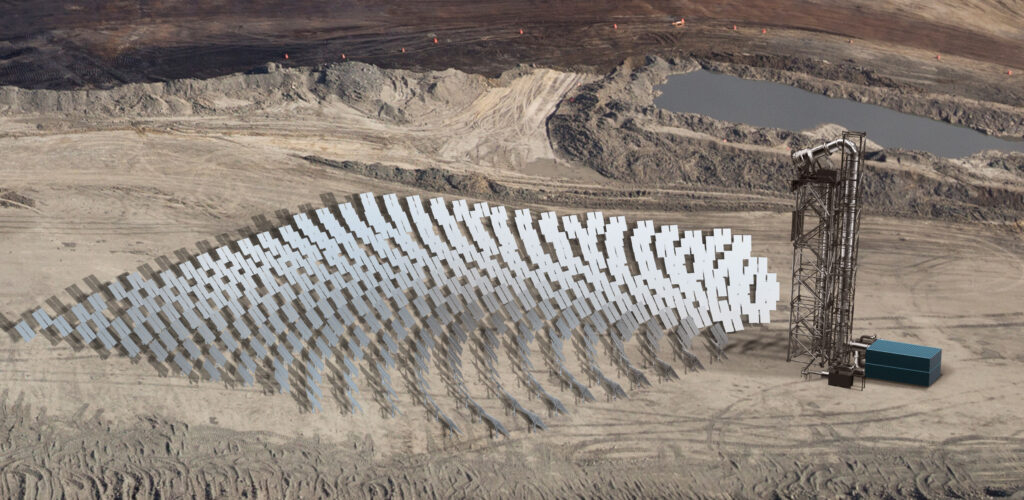
247Solar builds, owns and operates our hybrid solutions and sells round-the-clock clean heat and power on a PPA basis. Mines pay only for the energy they use with no additional capital cost and no risk.
We remove the burden of ownership by assuming all responsibility for operations, maintenance, insurance and repair. We guarantee energy delivery – redundant systems ensure reliability and eliminate the need for gensets.
Here’s what that means for miners:
- Reduced energy costs by 25% or more
- Stable, predictable energy prices for decades
- Lower operating costs per ton
- Increased competitiveness
- Longer life-of-mine
Get in touch to learn more
THE NEXT BIG TARGET IN MINE DECARBONISATION
SMS Equipment
Decarbonizing a mine’s power sources is the first essential step toward lowering mine emissions. But what comes next? An article in Energy and Mines interviews leading miners and explores the complexities of fleet electrification – another mission-critical goal in mine decarbonization.
The authors quote Kevin Mascarenhas, National Product Manager, Sustainable Mining at Komatsu Australia, whose battery truck is planned for joint customer trials with BHP and Rio Tinto in 2026.
“One of the key insights for us,” he says, “has been just how much effort goes into setting up the necessary power infrastructure and the associated costs … It’s not just about the truck – it’s the entire ecosystem around it.”
Preparing the infrastructure
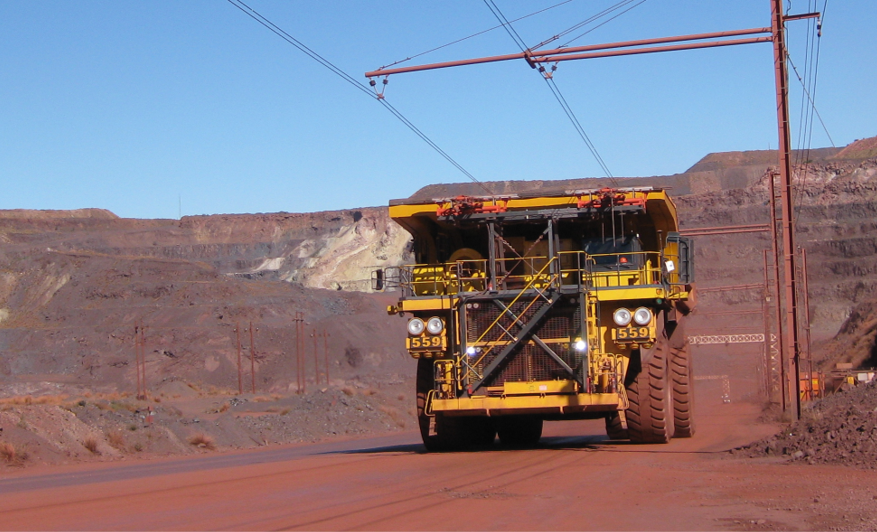
The first major consideration, says E&M, is ensuring sufficient electricity supply on-site. For example, Mascarenhas notes that adding that static chargers can require up to 6 MW each, while trolley lines may need as much as 12 MW.
“Upgrading the amount of power going into a mine requires large investments in transformers and other electrical infrastructure, such as cabling, reticulation, poles, and wires, which the industry doesn’t always anticipate.”
Darren Kwok, Head of Mining Electrification and Technology at global mining services firm Perenti, tells E&M, “The temptation is sometimes to be a little bit fixated on the machines because that’s effectively the thing that we’re changing. But the supporting infrastructure, the energy density, from generation to distribution to charging location: all of those things require investment.” Meanwhile, uncertainty around capital needs and electric fleets’ return on investment is limiting widespread adoption.
Change of equipment, change of mindset
E&M writes: “[W}hile the economic benefits of decarbonising mine fleets are still being ironed out—and will forever depend on the type of mine, depth, and ore grade— existing trials have made one thing clear: switching to electric equipment requires much more than a purchase order.”
Brian Boitano, Executive General Manager of Sales, Marketing, Training and Solutions for Liebherr Australia, says, “The adjustments are extraordinary … Today [mine fleets] are operated through a lens of utilization and production, with energy as a kind of an afterthought. In the future, we’re going to have to manage battery and cable operated pieces of equipment through an energy lens, allocating equipment across the mine site based on their battery charge, which is something we’ve never done in the past.”
Read more
BEHIND GULF STATES’ HEAVY INVESTMENT IN AFRICA
 We came across a fascinating piece in the newsletter from the African Mining Indaba, a large annual mining trade show. It’s a snapshot of the reasons why the Gulf States, particularly the United Arab Emirates (UAE), Saudi Arabia, and Qatar, are increasingly focusing investment on African mining, and the reasons why their outreach is being well-received. Here is what they said:
“Gulf economies are investing heavily in African mining to secure long-term access to critical and strategic minerals. These minerals are essential for clean energy, electric vehicles, and advanced technologies … [They also] want to diversify away from their oil dependency and control supply chains in the energy transition economy.
- Countries like Saudi Arabia (Vision 2030) and the UAE (Operation 300 BN) are aiming to become industrial powerhouses
- Partnerships secured in Africa support the ambitions regarding metallurgical processing, logistics, and manufacturing.
- The UAE and Saudi Arabia are becoming attractive alternatives to Western and Chinese partners for African nations
- The Gulf States are investing in African ports and corridors such as UAE’s DP World in Senegal, Mozambique, and Somaliland. These initiatives give them immense influence over export routes and trade infrastructure
- Gulf states often offer fast-track deals, less political friction, and Sharia-compliant financing options
- African countries see them as non-colonial, less interventionist partners. This makes them attractive players in mining agreements in fragile or emerging jurisdictions.”
For a country-by-country summary of Gulf States’ investment activity, see here.
FOLLOW & JOIN 247Solar
LinkedIn US, LinkedinEU, Twitter, YouTube
Contact: info@247solar.com