

SOLAR THERMAL: A PERFECT FIT FOR DECARBONIZING PROCESS HEAT
By Dr Kristen Griffin, Chief Product Officer, 247Solar, Inc.
As seen in Mining Weekly
Long viewed as the troubled sibling of solar photovoltaic (PV) power, solar thermal power has emerged from its adolescence ready to take on the biggest prize of all – decarbonisation of industrial heat.
Over the past several decades, as demand accelerated for renewable energy, the need for technologies capable of delivering energy around the clock has become clear. The concentrated solar power (CSP) towers that emerged in the early 2010s initially appeared to fit the bill. The basic concept was simple: an array of mirrors focuses sunlight on a receiver at the top of a tower, which captures the solar energy as heat. This heat is either immediately converted to electricity using a turbine or stored for later use at night or during bad weather.
Unfortunately, the limitations of technologies available at the time drove a series of design choices that increased the complexity of the system, including the selection of steam turbines. The steam turbines were paired with molten salts as the most effective heat transfer fluid and thermal energy storage medium available at the time.
The resulting systems involved complex designs, corrosive high-temperature fluids, and many moving parts, all of which made them cost effective only when built at the largest scales. These handicaps ultimately crippled their prospects. Ever since, traditional solar power towers have been characterised by challenges with reliability, toxic leaks and, ultimately, an ability to provide energy only 60% of the time at a high cost.
Intermittent Renewables Prevail
Meanwhile, simpler renewable energy solutions such as solar PV and wind were careening down their respective cost curves. Yet they too were intermittent — producing electricity only when the sun was shining or the wind blowing. Round-the-clock clean electricity remained a distant goal. Round-the-clock decarbonised heat was an even bigger challenge, earning the moniker “hard-to-abate,” because no solution based on solar PV or wind existed.
And so it was that even though traditional CSP had the ability to address both of the most pressing challenges of decarbonisation, it languished as a technology desperately in need of innovation.
As so often happens, the solution came from another scientific discipline entirely. An engineering lab at MIT was exploring applications for heat exchangers using newly developed high-temperature materials. The team, some of whom would go on to found modular concentrated solar energy system provider 247Solar Inc, envisioned using these materials for heat exchangers in air-based turbines to produce electricity.
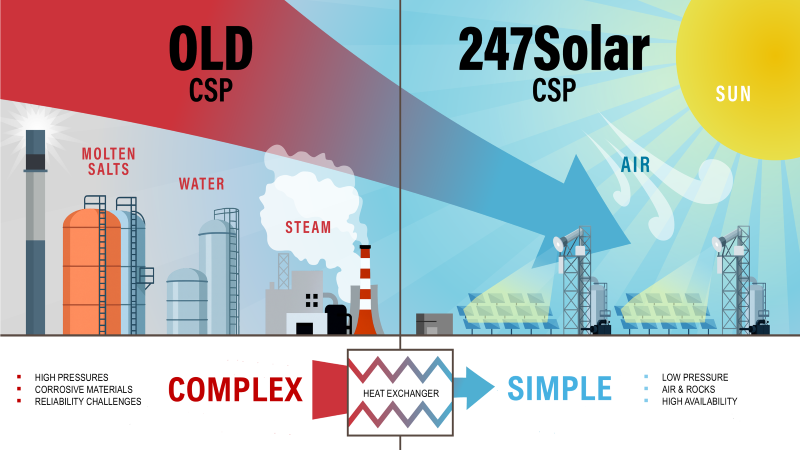 The team realised that by transferring heat to the compressed air inside the turbine at a sufficiently high temperature (~1000 oC), they could eliminate the turbine’s combustor and drive the turbine to produce electricity without steam or combustion. No water or fuel would be required, and no emissions would be produced. This single innovation eliminated the complexity that had plagued traditional CSP and birthed a new generation of elegantly simple solar thermal power.
Another advantage also emerged: the hot air flowing into the heat exchanger did not need to be pressurised. This meant that the entire system, including the receiver, could operate at atmospheric pressure. Once the receiver no longer needed to be an airtight pressure vessel, it was no longer limited to small sizes able to withstand high pressures and no longer required complex cooling systems, both of which had made prior air-based designs economically unviable.
In addition, the thermal storage no longer required expensive, liquid-based systems with hard-to-handle molten salts. Instead, the thermal storage could be a simple enclosure filled with inexpensive rocks, sand or ceramics. Once air-based solar thermal became possible, the limitations of traditional steam-based CSP disappeared.
How it Works
This next generation solar thermal plant is more like a wind turbine than traditional CSP in terms of few moving parts, design simplicity, and low risk to the environment. Like wind turbines, these modular systems can be deployed in any quantity to address the energy needs of a wide range of offtaker loads.
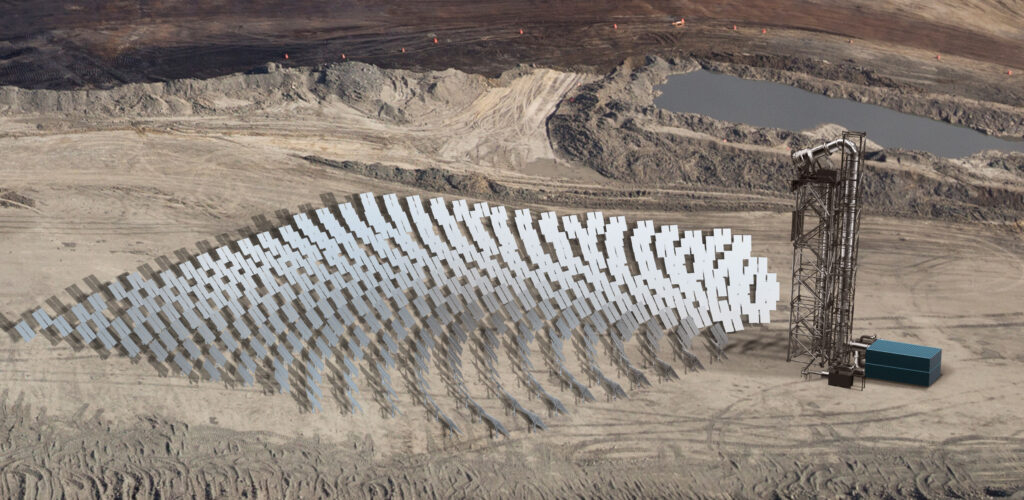
A simple receiver sits atop a tower, passively collecting sunlight from an array of mirrors and heating air that flows through it. The hot air can be directly provided to an offtaker for industrial processes, converted to electricity and medium-temperature heat by the turbine, and/or circulated through a thermal storage enclosure for later use. Because this system stores the sun’s energy as heat instead of electricity, no batteries are required, eliminating their costs and hazards.
This simple design provides high reliability and continuous operations through three unique features. With few moving parts and no liquid or steam, the system is easy to maintain and has an intrinsically low risk of failure. During maintenance, the modularity of the system virtually eliminates downtime; should one module be offline, the others are still available. Finally, the system includes its own backup; the turbines, by design, are capable of burning a variety of fuels to provide heat and power when neither sunlight nor stored heat are available.
No Longer ‘Hard to Abate’
Process heat, which comprises 60% of global industrial energy consumption, is well served by next-generation solar thermal. Growing numbers of heat-only technologies are emerging for industrial decarbonisation, especially in relatively low temperature realms. The plant developed by 247Solar is the first to provide a comprehensive solution for both high temperature clean heat and electricity around the clock.
Applications:
Converting from fossil fuels to CSP with integrated storage provides many environmental, economic, social and risk strategy benefits to mines that currently require onsite processing or are considering onsite processing but haven’t due to their remoteness and the difficulty or cost of getting fuels to the site.
Processes that can be decarbonized using solar thermal technology include:
- Low Temperature Processes
Low temperature (<100°C) thermal process include heap leach heating for gold and copper ores, electrowinning and CIP/CIL for gold processing.- Medium Temperature Processes
Dryers are a good example of a Medium Temperature (100°C – 600°C) mining process and are utilized for such operations as drying ore, concentrates (copper, zinc, lead, gold, silver, PGM, lithium, nickel, cobalt and manganese) and iron ore pellets.- High Temperature ProcessesHigh temperature (600°C – 2000°C) processes in mining include roasting, smelting, calcining, iron ore pelletizing, aluminum electrolysis, ferroalloy and silicon, and rare earth and lithium processing.
Prior to this innovation, commercial and industrial heat consumers were left out of the energy transition. At last, air-based concentrated solar thermal technology has arrived to decarbonise this critical sector, with simplicity, reliability and affordability that makes emissions from industrial heating no longer “hard to abate.”
ROUND-THE-CLOCK CLEAN HEAT AND POWER FOR MINES
WITH NO ADDITIONAL CAPITAL COST
247Solar builds, owns and operates our hybrid solutions and sells round-the-clock clean heat and power on a PPA basis. Mines pay only for the energy they use with no additional capital cost and no risk.
We remove the burden of ownership by assuming all responsibility for operations, maintenance, insurance and repair. We guarantee energy delivery – redundant systems ensure reliability and eliminate the need for gensets.
Here’s what that means for miners:
- Reduced energy costs by 25% or more
- Stable, predictable energy prices for decades
- Lower operating costs per ton
- Increased competitiveness
- Longer life-of-mine
Get in touch to learn more
$12B U.S. CRITICAL MINERALS RESERVE COULD RESHAPE GLOBAL MINING FLOWS
VOA
U.S. President Donald Trump has announced a new U.S. critical minerals stockpile called “Project Vault,” to be funded with a $10 billion loan from the U.S. Export-Import Bank, along with $2 billion in private-sector financing. Bloomberg reports that the initiative is intended “to insulate manufacturers from supply shocks as the U.S. works to slash its reliance on Chinese rare earths and other metals.”
The New York Times writes that the effort will involve procuring and storing minerals for American manufacturers, noting that Mr. Trump likened the endeavor to the government’s oil reserves and other emergency caches. The stockpile is for non-military civilian purposes. CBS News quotes Trump saying that “just as we have long had a strategic petroleum reserve and a stockpile of critical minerals for national defense, we’re now creating this reserve for American industry.”
According to CNBC, the stockpile can encompass any resources classified ‘critical’ by the U.S. Geological Survey, noting that the USGS identifies over 50 minerals as critical, including rare earth elements, lithium, uranium, and copper.
Implementation
According to Export-Import Bank officials, the U.S. stockpile will procure these minerals both domestically and internationally and house them in a network of storage facilities within the United States. CNBC describes Project Vault as part of a wider strategy in which the administration has also invested in various mining companies, including an equity and off-take deal with MP Materials and planned financing for USA Rare Earth, Lithium Americas, and Trilogy Metals.
CNBC notes that investors expect the reserve to tighten supply and support prices for some materials. However, details about which minerals will be prioritized and how contracts will be structured remain limited, suggesting that identifying specific beneficiaries is still “highly speculative” at this stage.
ENERGY THEMES DOMINATE 2026 MINING OUTLOOKS
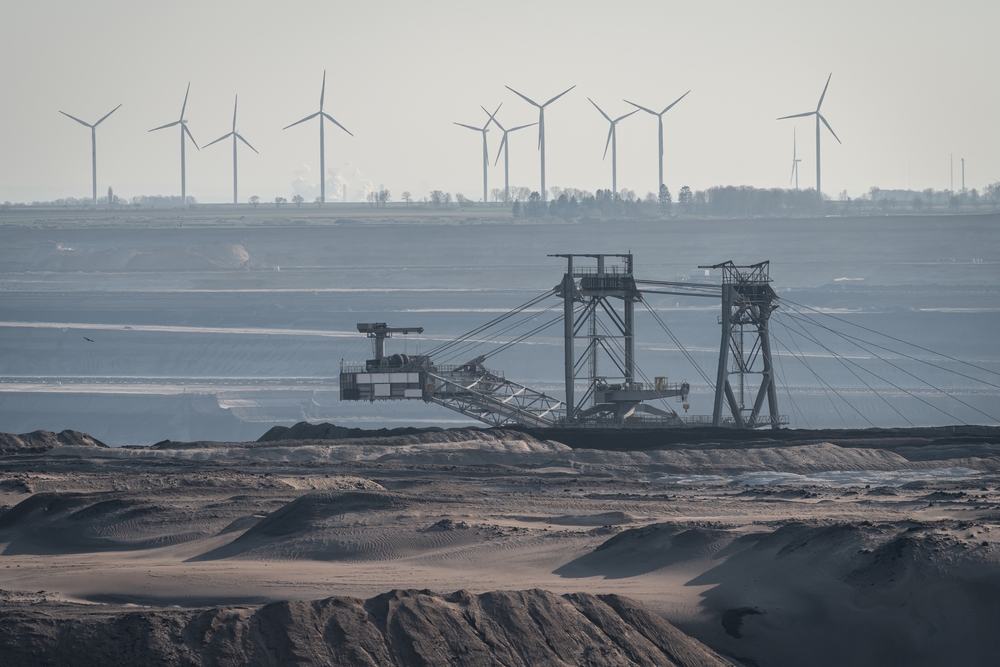
Energy- and climate-related themes sit at the core of 2026 mining trend projections, often framed as both risks and opportunities for value creation. Mining Technology highlights four continuing sector-wide forces from 2025 that the authors expect to carry into 2026: digital acceleration, the energy transition, a stronger focus on responsible business/ESG, and growing government involvement in markets.
Milos Ruzicka/Shutterstock
Minetek’s 2026 Mining Outlook expands this into seven forces for 2026: sustainability and decarbonization, evolving ESG and regulatory pressure, technological advances and automation, workforce well‑being, escalating water scarcity, tighter capital discipline, and rising geopolitical influence on supply chains.
Taken together, the main trends projected for 2026 are:
- Decarbonization and sustainability (including energy transition and climate targets).
- Integration of renewables, electrification and low‑carbon mine power.
- Digitalization, automation and AI‑enabled operations.
- ESG, responsible mining and stricter regulation.
- Water stress and environmental constraints beyond carbon.
- Workforce, skills and safety, including “generational shift.”
- Capital discipline and cost pressure amid volatile markets.
- Geopolitics and critical‑minerals supply chains.
Energy at the core
Minetek explicitly opens its 2026 outlook with “Sustainability and Decarbonization,” noting that decarbonization is reshaping mining as companies scale supply of transition minerals while investing in renewables, electrification and energy‑efficient infrastructure at sites. In Minetek’s assessment, energy is not a peripheral topic but instead a structuring constraint on how mines are powered and designed.
Mining Technology also elevates “Energy transition in mining,” noting that mining’s role in supplying critical raw materials for renewables and batteries is reshaping sector attractiveness and workforce dynamics. Of all the trends it identifies, MT suggests that energy transition is unique in being tightly linked to talent, permitting and social licence. By contrast, other trends like water scarcity, workforce well‑being, and capital discipline, while prominent, are framed as interacting pressures rather than the central organizing logic for strategy.
Across both outlooks, energy‑related themes—decarbonization, power systems, electrification, and the broader energy transition—are presented as cross‑cutting drivers behind technology choices, regulatory responses and capital allocation. Digitalization, ESG, geopolitics and social factors are important, but they are often discussed in relation to meeting climate and energy‑transition goals, underscoring the salience of energy as perhaps the defining context for mining in 2026.
IEF: INTERNATIONAL TRADE KEY TO CRITICAL MINERALS SUPPLY
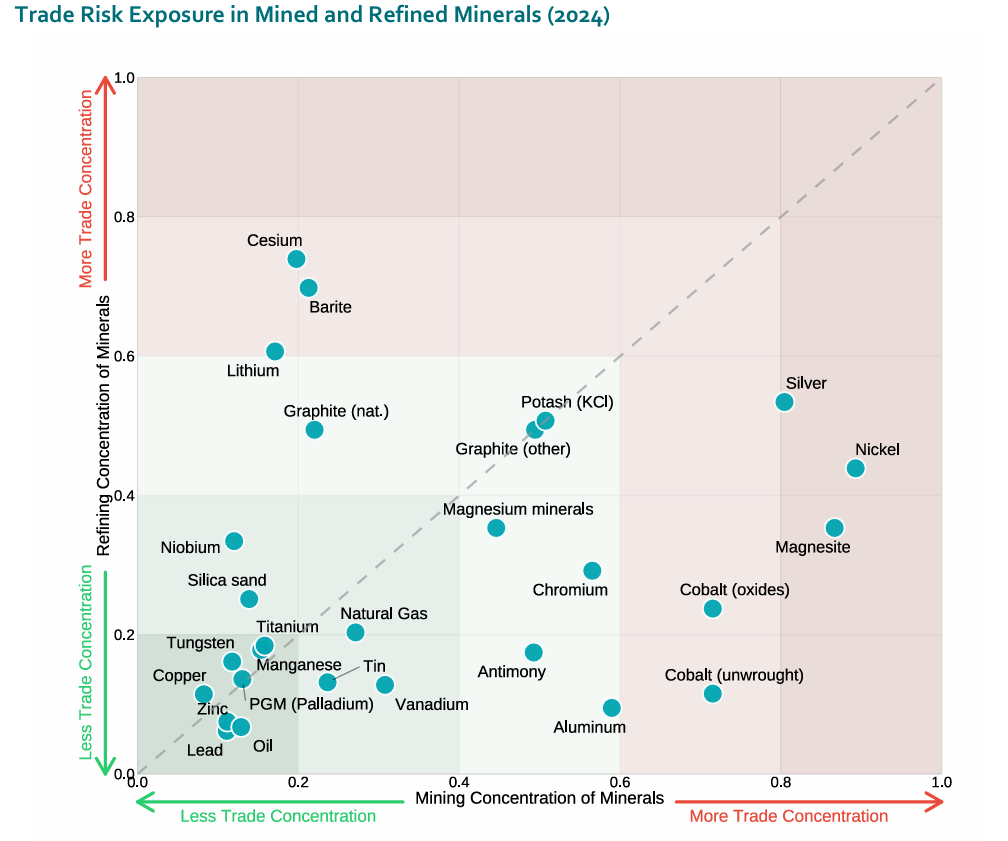
A new International Energy Forum (IEF) analysis, reported by Mining.com, shows that over 60% of global demand for critical minerals is currently satisfied through international trade, underscoring tight interdependence between resource‑rich producers and clean‑energy consuming economies. As clean energy deployment accelerates, this trade dependence makes supply chains acutely exposed to geopolitical tensions, export controls and mid‑stream refining bottlenecks.
Credit: IEF
The IEF’s report, A Critical Minerals Enabled Energy Future, projects demand for core transition minerals—copper, nickel, cobalt, lithium and rare earth elements—rising from 28 million tons in 2021 to nearly 41 million tons by 2040. Copper remains the largest single contributor in clean‑energy uses, more than doubling to over 12 million tons, while lithium and nickel see more than tenfold growth driven by batteries and storage. Rare earths and cobalt also grow strongly, as electrification, digital infrastructure and advanced manufacturing all compete for the same constrained mineral base.
Electric vehicles are a central demand engine: the IEF notes EVs use about four times more copper than internal‑combustion cars, with copper demand from EVs projected to jump from 200,000 tons in 2020 to 3.4 million tons by 2035, implying around 14% average annual growth between 2025 and 2035. At the same time, AI, data centers and semiconductor‑intensive industries add another layer of structural demand for these minerals.
The resulting supply risk is intensified by geographic concentration: Indonesia provides more than half of global nickel, the DRC about 70% of cobalt, and China over 90% of rare earth refining capacity, while lithium mining is dominated by Australia, Chile and China. Policy responses have surged, with more than 600 critical‑mineral‑related policies worldwide; OECD countries emphasize incentives for exploration, refining and recycling, while producer nations push in‑country value addition and export measures. But the IEF warns that poorly coordinated interventions and export controls can exacerbate volatility, arguing for more transparent markets, shared data and producer‑consumer dialogue, citing experience from oil markets.
For mining companies, the IEF study suggests focusing on social license and long‑term offtake agreements in a world of concentrated supply and politicized trade, while investing in new projects, mid‑stream processing and recycling to capture policy tailwinds and de‑risk revenue. For clean energy developers and OEMs, it underlines the urgency of diversifying supply, locking in strategic partnerships with miners, designing for material efficiency and recyclability, and supporting cooperative policy frameworks that keep mineral markets open and investable.
FOLLOW & JOIN 247Solar
LinkedIn US, LinkedinEU, Twitter, YouTube
Contact: info@247solar.com