
WHY DATA CENTERS SHOULD ACCELERATE CLEAN POWER, NOT GAS
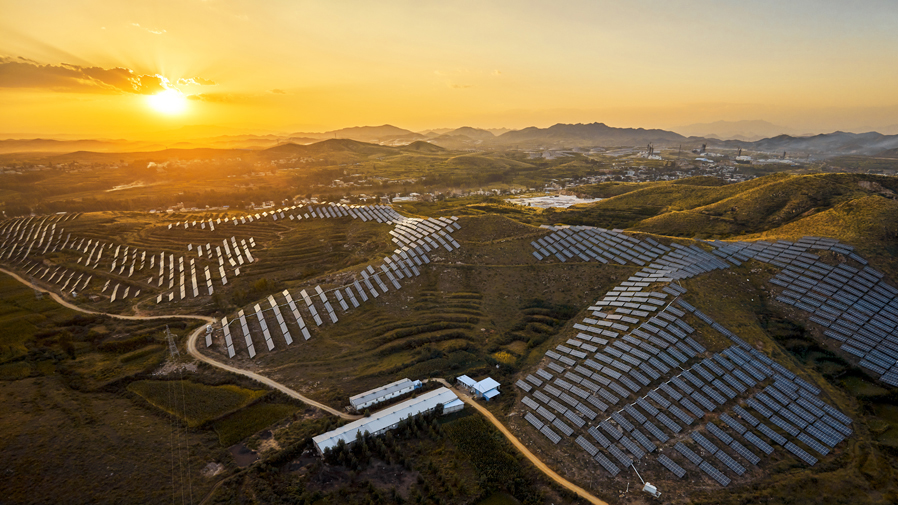
Make More Aerials/Shutterstock
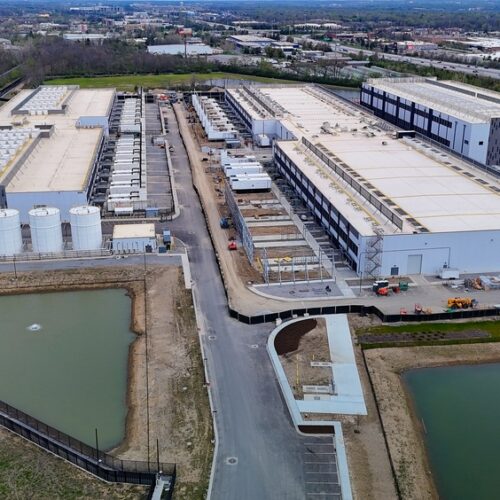
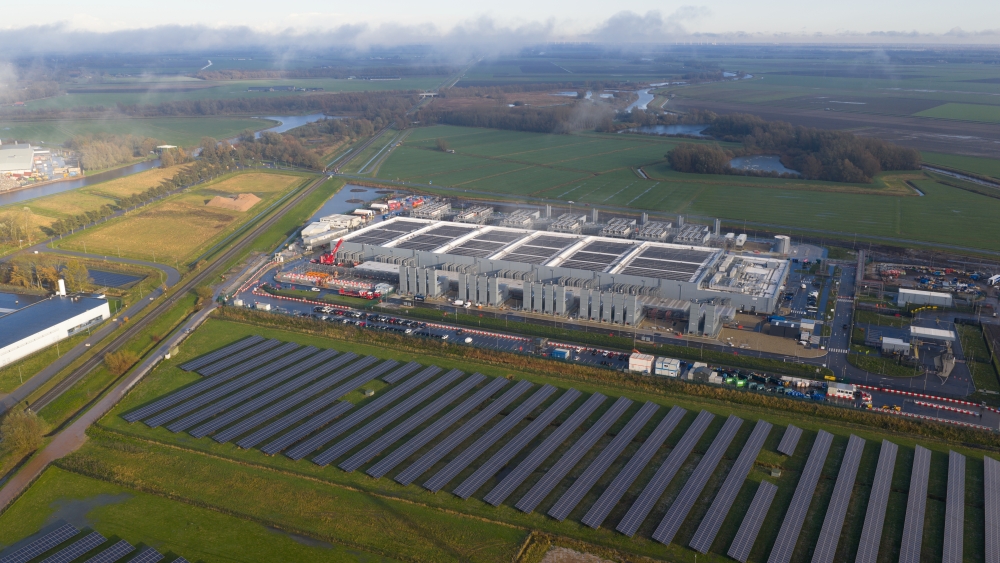
The rush to build AI data centers has turned into a convenient rationale for a new wave of gas plants. Utilities and energy suppliers are pointing to “unstoppable” AI demand to justify trillions of dollars in gas, nuclear, and even coal investments, arguing that only these resources can keep the lights on in an AI era. But underneath the rhetoric, the numbers tell a different story: building fossil-fuel infrastructure to power data centers is shortsighted when renewables are already the cheaper, faster choice.
A risky bet
As Amory B. Lovins and Justin Locke write in Canary Media, energy suppliers don’t yet know how many of those facilities will eventually materialize, yet they are using AI’s ravenous appetite for electrons to justify vast new investments in long‑lived fossil assets. This is locking in decisions that will expose them to volatile power prices for decades, even though the demand forecasts behind them are highly uncertain. There are several risks to this approach:
- Overbuild risk: If even a portion of today’s AI demand projections fail to materialize, ratepayers and investors are left paying for plants that are neither fully used nor easily repurposed.
- Fuel‑price risk: Gas plants embed long‑term exposure to fuel price volatility, while AI customers are demanding stable, predictable cost structures.
- Carbon‑policy risk: As climate policy tightens, highly emissive assets built today are more likely to face higher compliance costs, curtailed run times, or accelerated write‑downs.
By contrast, modular clean resources — wind, solar, storage, and other firm clean options — can be staged over time and financed with far less exposure to future fuel prices or demand shortfalls.
Gas is often slower and more expensive in practice
The argument that “only gas can scale fast enough” ignores real‑world constraints that are already biting. Turbine supply chains, long development timelines, and mounting local opposition are slowing conventional projects. At the same time, renewables and storage have become the dominant source of new capacity because they can often be sited and built faster, especially at the scales that individual data center campuses require.
Clean portfolios also avoid the compounding effect of fuel and carbon costs over a project’s life. Once built, wind, solar, and many forms of storage have effectively zero marginal fuel cost, whereas gas plants commit owners to decades of commodity risk. For hyperscalers and AI developers under pressure to deliver both growth and cost predictability, that distinction matters as much as emissions.
Smarter ways to meet AI‑era load growth
The good news is that utilities and large loads are not limited to “gas or nothing.” A growing set of policies and incentives are emerging to make big new loads take responsibility for their own power while protecting other rate-payers:
- Large‑load tariffs and cost‑shielding structures: Several states are experimenting with dedicated tariffs for very large customers that explicitly allocate grid upgrade and resource costs to those who are driving the demand, rather than socializing them across all ratepayers.
- Bring‑Your‑Own (BYO) and Clean Transition Tariffs: Under BYO structures, large loads pay directly to add new power resources, often clean resources, that serve their needs without burdening other customers. When designed as Clean Transition tariffs, eligibility can be restricted to carbon‑free options, further aligning with policy goals.
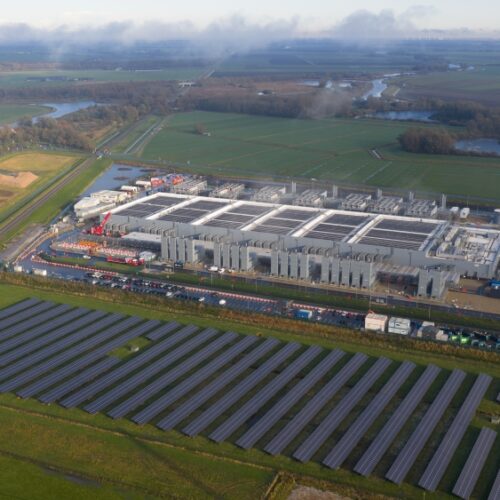
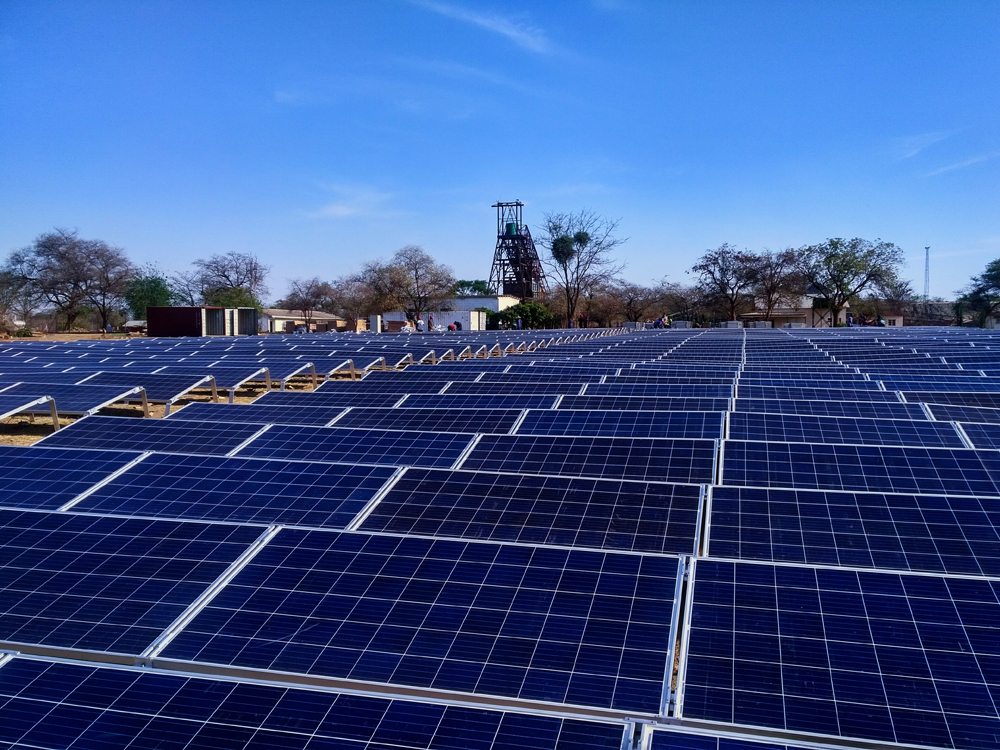
- On‑site and “on‑campus” clean generation: Data centers can build or contract for renewables and storage on or near their sites, easing transmission constraints and speeding deployment compared with distant, central‑station plants.
These approaches are already moving from theory to practice. Utilities in multiple states are exploring structures that require data centers to pay most or all of the cost of new capacity built on their behalf, while some large tech firms are co‑developing clean power projects and associated tariffs to cover their incremental load.
What this means for developers
For data center operators and AI developers, the choice is increasingly clear. They can accept utility plans that saddle them with long‑term exposure to fuel and policy shocks, or they can embrace cleaner, more flexible alternatives that support their growth trajectories while mitigating public concerns. The second path is not only better for the climate; it is also the more rational business decision in a world where power, not compute, is becoming the real bottleneck for AI infrastructure.
GRID-INDEPENDENT ENERGY FOR DATA CENTERS
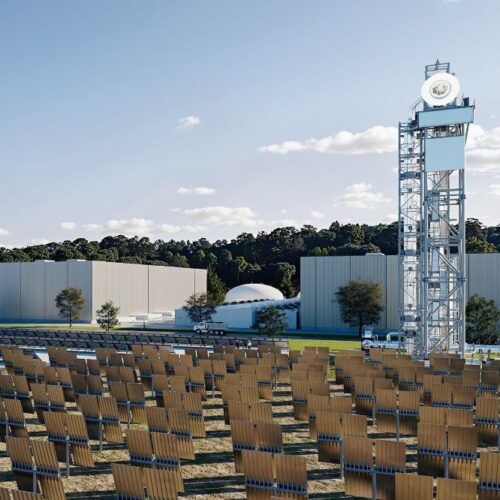
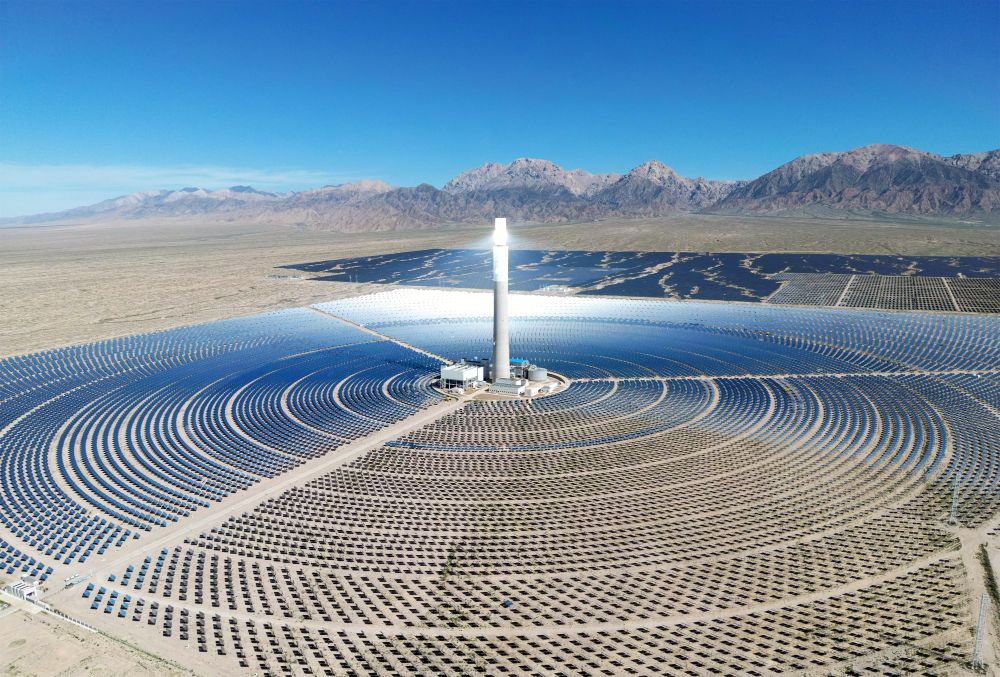
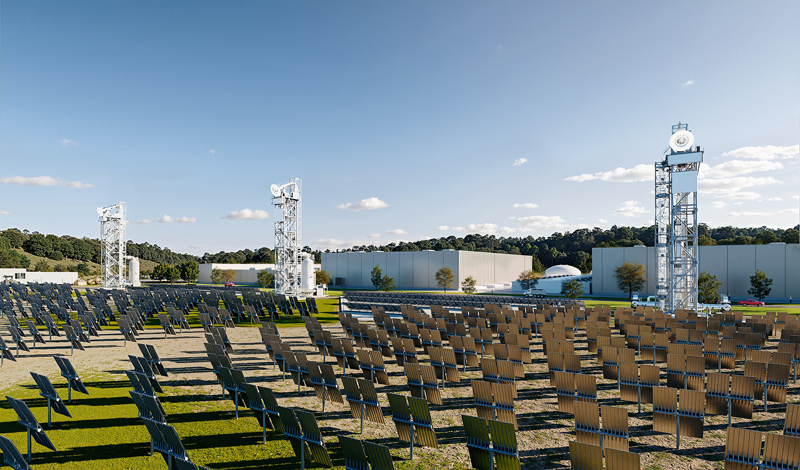
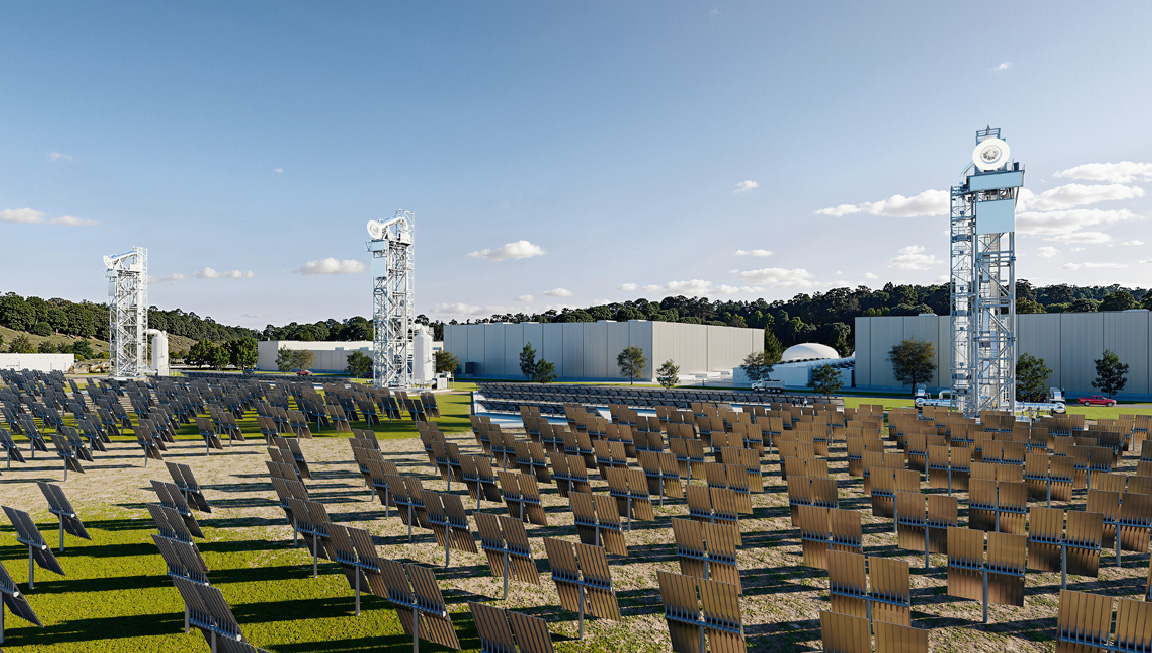
No need to wait years for a grid connection. 247Solar’s hybrid clean solutions are ready to power your data centers as soon as you can build them. 247Solar’s solutions provide both electricity and chilling in a single turnkey package. 247Solar builds, owns, and operates its systems and sells energy on a PPA basis at predictable prices for 20 years or more.
247Solar offers data centers
On-grid or off-grid, 247Solar Plants offer a 24/7 alternative to fossil fuels for a broad range of applications:
- Rapid deployment now
- Firm, 24/7 baseload power
- Close load following
- Super-high reliability – no backup required
- Electricity and chilling in a single package
- Predictable energy costs
THE STRAIT OF HORMUZ JUST MADE RENEWABLES IMPOSSIBLE TO IGNORE
 For years, the case for clean energy investment rested heavily on climate economics: lower emissions, falling costs, long-term sustainability. The recent disruption around the Strait of Hormuz has added a harder-edged argument that is harder for skeptics to dismiss — energy security.
Writing in Fortune, Tenzin Seldon, the founder and managing partner of Pulse Fund, notes that roughly 20 million barrels of petroleum liquids move through the Strait of Hormuz every day, representing approximately one-fifth of global supply. With that corridor under threat, oil prices have spiked and the vulnerability of fuel-dependent economies has been exposed in real time. The message is not subtle: any nation, grid, or industrial operation that depends on liquid fuels imported through geopolitical chokepoints is carrying a risk that cannot be fully hedged.
That risk is not new, but it has rarely been this visible. The 1973 Arab oil embargo, the 1990 Gulf War, and repeated tanker incidents in the region have all sent the same signal. What is different now is that the alternatives — solar, wind, storage, electrification, and distributed clean generation — have matured to the point where the transition is an economically rational response, not just a political preference.
For industrial operators, the implications are direct. Facilities that rely on diesel or gas for power and heat carry not just a carbon liability but a supply-chain and price-volatility liability that is ultimately tied to the same geopolitical risks that move oil markets. Electrifying those loads and backing them with clean, locally generated or contracted power is a way to reduce that exposure.
For investors and lenders, the Hormuz episode reinforces what many are already pricing into portfolios: that fossil-fuel dependence is a systemic risk factor, and that clean energy infrastructure is increasingly a resilience asset, not just a green preference. This security argument, long the domain of defense analysts, has now become broadly compelling.
Read more
COLOMBIA SUMMIT: REST OF WORLD STEPS AROUND FOSSIL-FUEL STALEMATE
When nearly 60 nations gathered in Santa Marta, Colombia in late April for the First Conference on Transitioning Away from Fossil Fuels, the meeting’s most telling detail was not who attended — it was who did not.
The United States was not invited, a direct consequence of the Trump administration’s retreat from international climate engagement. China, India, Russia, and Japan also stayed away, as did the oil-rich Gulf states. Together, those absentees represent the world’s three largest greenhouse-gas emitters, its largest oil exporter by reserve, and several of the economies most structurally dependent on fossil-fuel revenues. As the BBC reported, the nations that did attend represent roughly 20 percent of global fossil-fuel output — significant, but far short of a majority.
Colombian Environment Minister Irene Vélez Torres was direct about the absences. According to Newsgram’s coverage of the summit, she told The Guardian simply: “This is not the space for them.”
That framing matters. The Santa Marta conference, co-hosted by Colombia and the Netherlands, was deliberately designed to operate outside the traditional UN climate architecture. The New York Times described it as “the first global conference aimed at phasing out fossil fuels,” while the BBC noted that it addressed something “that has eluded consensus at UN climate summits.” The implicit argument is that the COP process — where major emitters and fossil-fuel producers hold effective veto power over ambitious language — has become too slow and too compromised to drive real transition policy.
The attending countries — including Australia, Nigeria, Angola, Brazil, Canada, Norway, Turkey, Vietnam, and dozens of smaller and island nations — represent a coalition defined not by geography or ideology but by a shared conclusion: that waiting for the largest emitters and producers to lead is no longer a viable strategy.
For mid-sized economies in particular, the security and resilience logic of this position is increasingly hard to argue with. As the Hormuz disruption demonstrated this spring, fuel-dependent nations bear the sharpest end of geopolitical energy risk without having meaningful influence over the conditions that create it. Building domestic clean generation, electrifying industrial loads, and reducing import dependence are not just climate policies — they are rational acts of national self-determination.
The Santa Marta declaration did not produce binding commitments, and no one expected it to at a first convening. What it did produce is a coalition architecture — a table that excludes the actors most likely to obstruct progress and includes those most motivated to move. A second conference, to be led by Pacific island nations, is already planned.
Read more
FOLLOW & JOIN 247Solar
Contact: info@247solar.com