
FIRMING THE SUN AND THE WIND – WHY CHINA IS BETTING BIG ON CSP
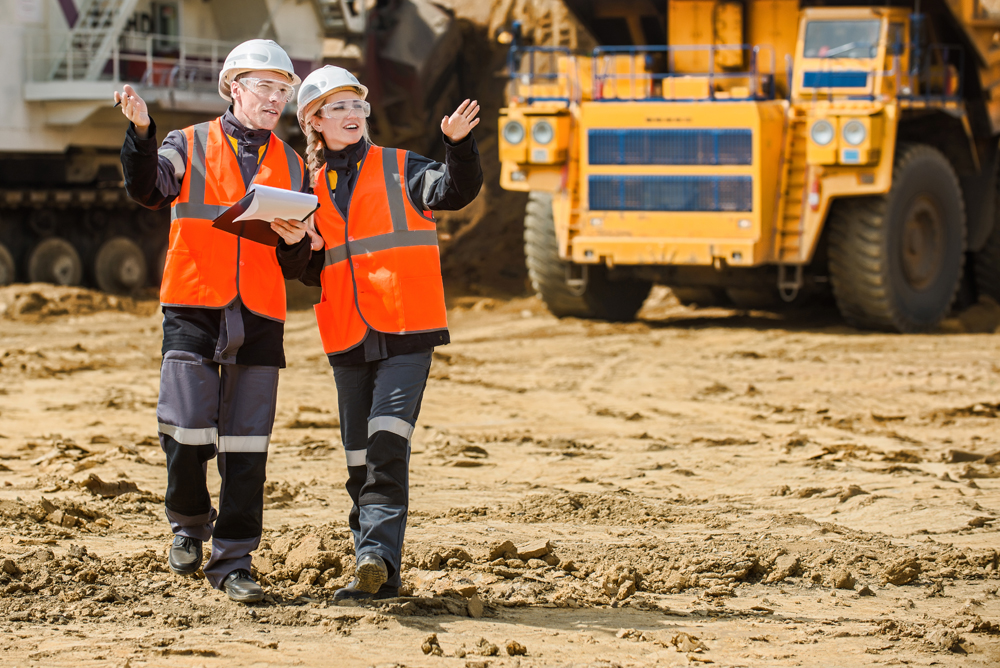
harhar38/Shutterstock
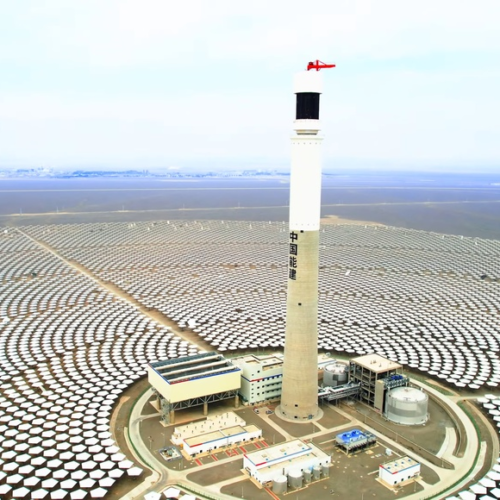
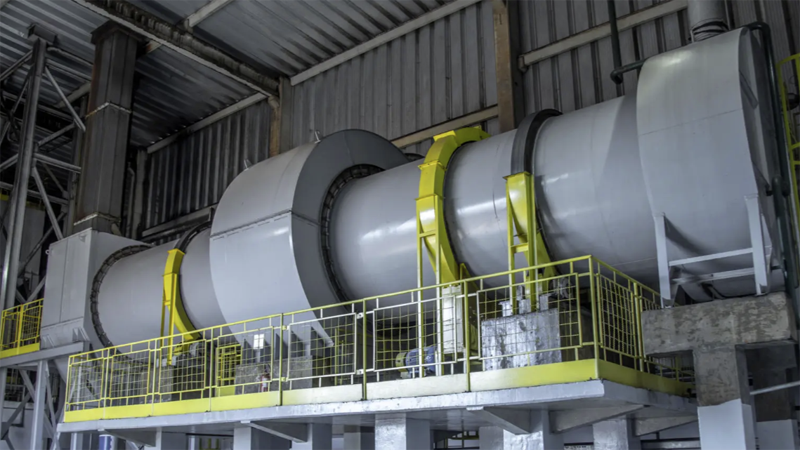
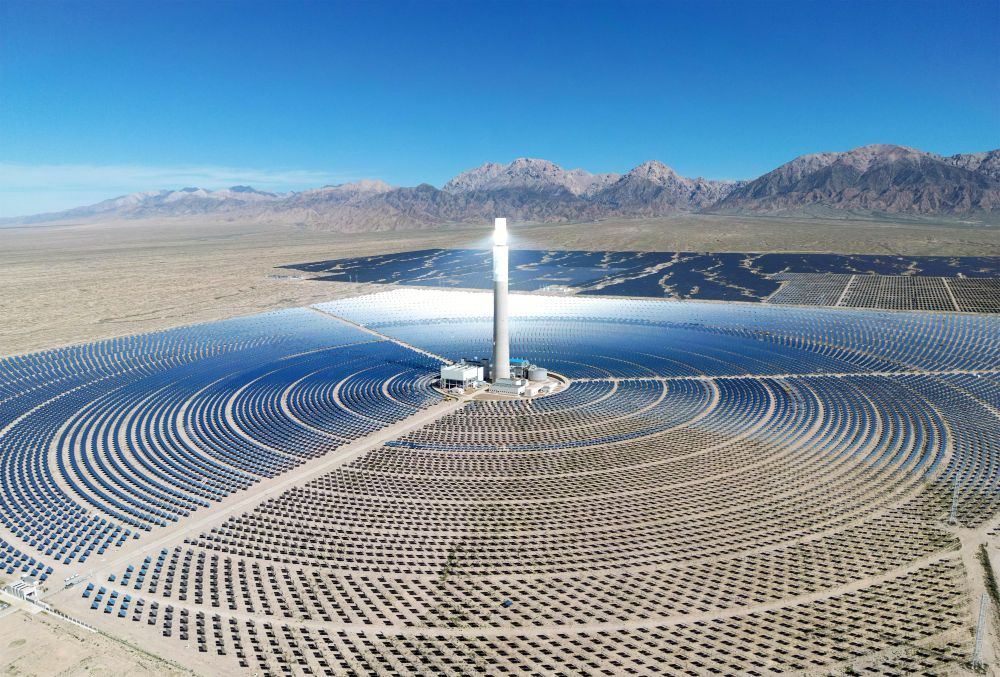
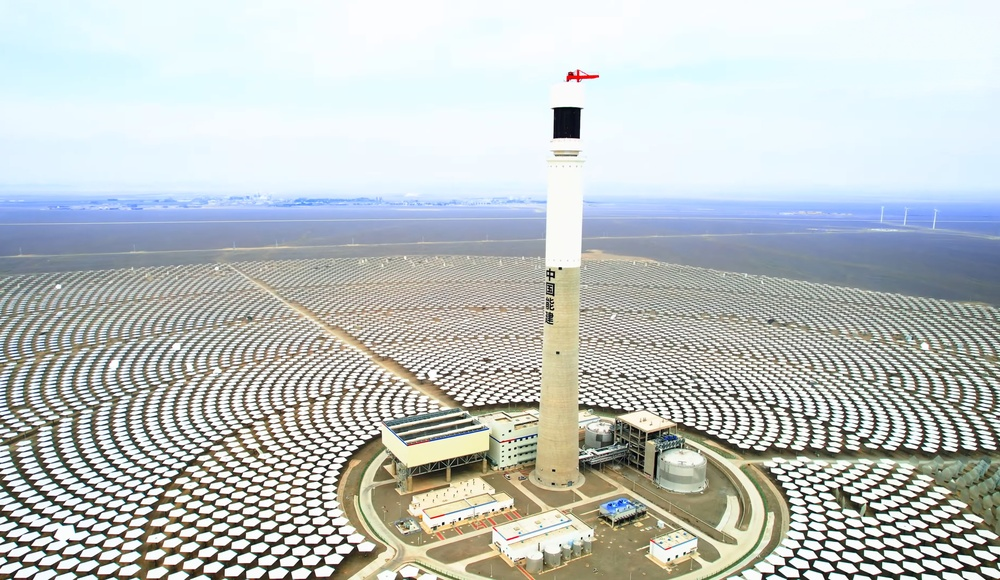
“China is now the world leader in CSP deployment.” So declared SolarPACES on November 5. The milestone came on October 30, when the 100 MW molten-salt tower section of China Green Development Group’s 1 GW Fukang multi-energy project in Xinjiang began grid-connected generation. According to China Solar Thermal Alliance data cited by SolarPACES, that lifted China’s cumulative concentrating solar power (CSP) capacity to 2,438 MW, past Spain, the industry’s long-time leader, whose fleet Nikkei Asia puts at 2.3 GW. A week later, China General Nuclear (CGN) connected the first 25 MW unit of a 50 MW CSP plant at 4,300 meters in Tibet’s Ngari Prefecture.
The capacity figure matters less than the intent behind it. China is no longer just the world’s clean energy factory; it is increasingly its leading clean energy innovator. The International Energy Agency’s State of Energy Innovation 2026 report finds that Chinese companies account for 60% of corporate R&D spending on energy supply and infrastructure, and that Chinese inventors filed twice as many international energy patent applications in 2023 as in 2020, reaching twice the level of the United States, Japan or Europe.
When a country with that record makes a deliberate, policy-backed commitment to a technology, the rest of the world would do well to pay attention. China already dominates solar PV, wind and batteries. So why is it building CSP, too?
A deliberate target
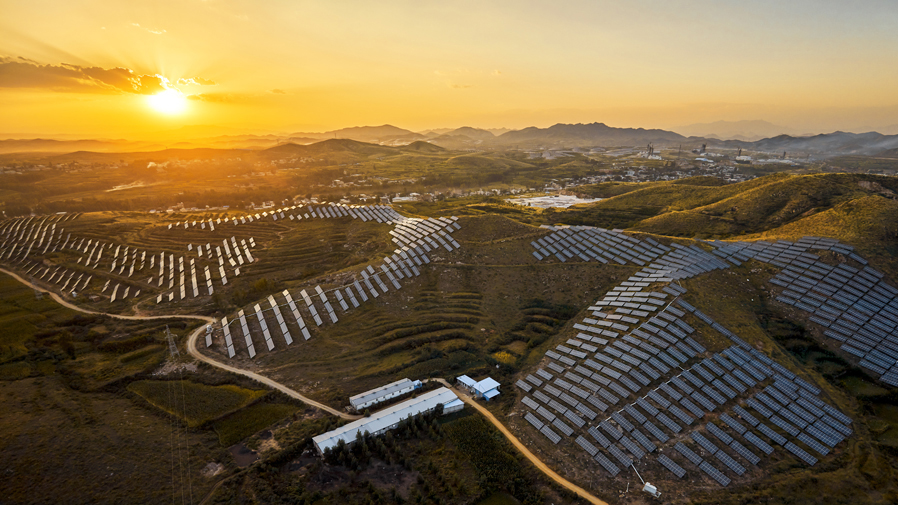
In December 2025, China’s National Development and Reform Commission (NDRC) and National Energy Administration (NEA) jointly issued opinions on the large-scale development of CSP, targeting about 15 GW by 2030 at a cost “basically equivalent to that of coal-fired power,” in the China Solar Thermal Alliance’s translation. With most Chinese towers sized at 100 MW, SolarPACES notes, that implies roughly 150 projects. The pipeline is real: Nikkei Asia reports that 24 CSP plants had been completed by the end of June, with construction under way at 26 more, and Qinghai alone plans 8 GW by around 2030. The policy also pushes toward 300 MW plants, gathering data for future 600 MW units.
Costs are declining. Xinhua reports that construction costs have dropped from about 30,000 yuan ($4,500) per kilowatt a decade ago to around 15,000 yuan ($2,250). In an interview with SolarPACES’ Susan Kraemer, Sunny Sun, general manager of CSPFocus, noted that the winning bid in a recent Qinghai tender for standalone 300 MW plants came in at RMB 0.47($.07)/kWh, down from RMB 1.2($.18)/kWh in 2016.
Firming the sun and wind
The NDRC-NEA policy is explicit about why. It describes CSP as both a peak-regulating power source and long-duration energy storage, able to provide grid inertia, frequency and voltage regulation and black-start capability. Developers have settled on a recognizable template: Fukang, like PowerChina’s 1 GW Gonghe project in Qinghai, pairs roughly 900 MW of PV with a 100 MW CSP plant. At Gonghe, PV Magazine’s Vincent Shaw reported, the CSP unit has eight hours of molten-salt storage plus a 20 MW electric heater that turns surplus PV output into stored heat for evening generation.
Batteries still have a role. Sun told SolarPACES that batteries suit short durations, “like two hours, maybe four hours,” while thermal storage offers more economic and technological benefits at six hours or more; most large Chinese complexes include both. CGN’s Ngari plant makes the division of labor explicit: lithium-ion batteries handle fast frequency response, while 205 MW of electric heaters charge molten salt holding 14 hours of heat. CGN’s 350 MW Wutumeiren project in Qinghai will carry 15 hours.
Heat too
China is also looking beyond electricity. The NDRC-NEA opinions call for CSP systems to serve nearby “electricity, steam, and heat” needs. These include mineral development and smelting, computing centers, battery manufacturing and salt-lake lithium extraction, as well as industrial parks running on high shares of renewables. At Ngari, PV Magazine reports, stored heat will also supply winter district heating to Shiquanhe, the prefecture’s administrative center, making it a solar combined heat and power plant on the roof of the world.
Bringing CSP closer to the load
Most of China’s CSP fleet consists of large, grid-connected plants in the remote deserts and plateaus of Qinghai, Xinjiang, Gansu and Tibet, feeding long-distance transmission. That suits China’s geography and grid. But the attributes Beijing values (firming, long-duration thermal storage and usable heat) are just as valuable at the point of use.
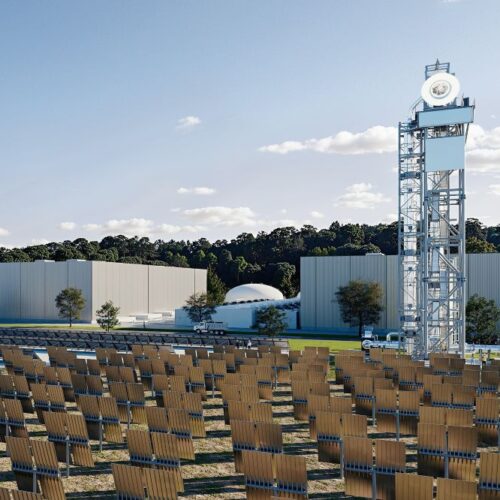
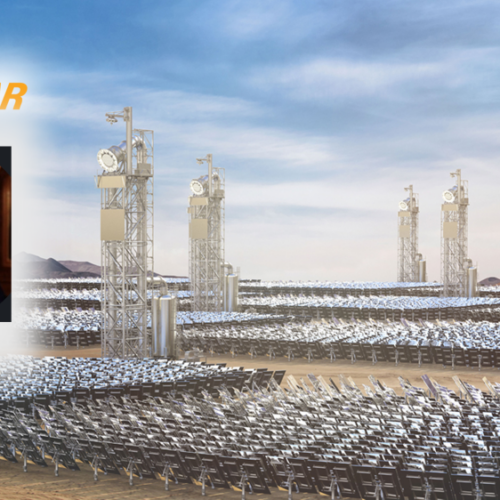
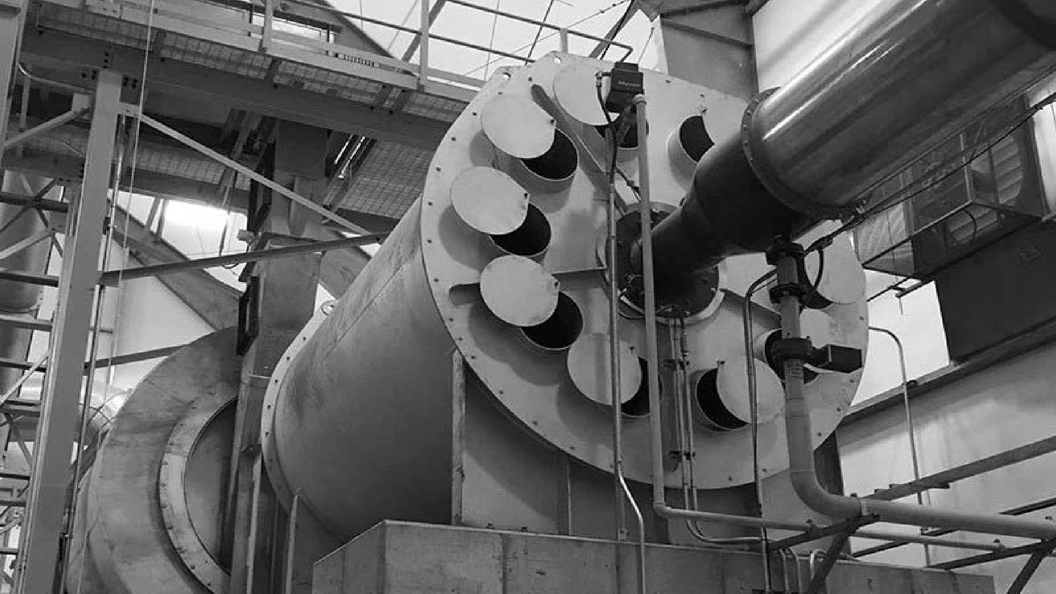
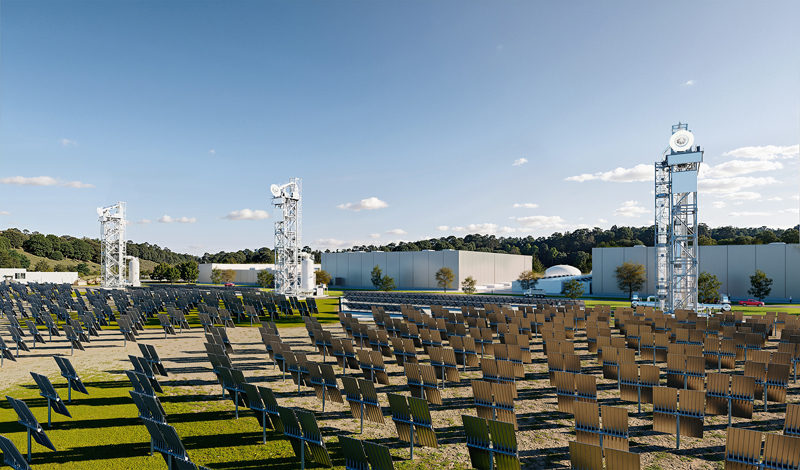
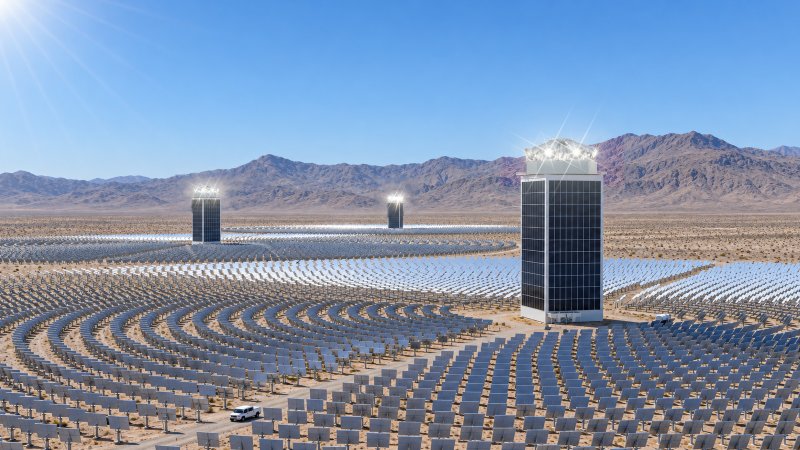
Modular, scalable solar thermal systems like 247Solar’s can bring those advantages closer to the end user, even behind the meter, to power mines, data centers and industrial combined heat and power applications. These hot-air-based systems also overcome the hazards of molten salt storage, while simpler engineering and factory-produced components dramatically reduce production costs.
China clearly understands the benefits only CSP can offer in realizing the potential of baseload or near-baseload renewable power and heat. It may be time for the rest of the world to take a fresh look at the technology.
ROUND-THE-CLOCK CLEAN CLEAN ELECTRICITY AND HEAT
247Solar Plants™ bridge the gap between conventional wind and solar and the need for round-the-clock utility power and industrial-grade heat. 247Solar Plants store the sun’s energy as heat instead of electricity, for 18 hours or more, at much less than the cost of batteries. No generators are required, and 247Solar’s turbines can also burn a variety of fuels, including hydrogen, to ensure 24/7/365 dispatchability.
Extensive Applications
On-grid or off-grid, 247Solar Plants offer a 24/7 alternative to fossil fuels for a broad range of applications:
- Industrial CHP: 24/7 low-carbon Combined Heat & Power for industry
- Data Centers: 247Solar’s solutions provide both electricity and absorption chilling in a single turnkey package
- Ultra Heat: 247Solar Plants provide clean heat at temperatures up 1000℃/1800℉ for industrial processes
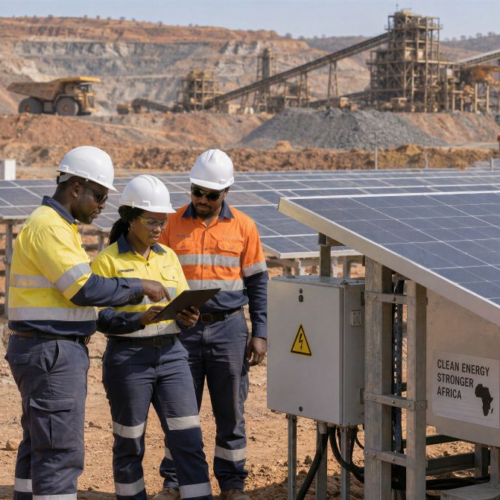
- Microgrids: Always-on, emissions-free electricity and heat for islands, mines, communities, facilities
- 24/7 baseload power: 24/7 solar electricity, especially for emerging economies
- Green Hydrogen: 24/7 solar electricity and heat to power electrolysis around the clock
- Green Desalination: 24/7 solar electricity and heat to purify water around the clock
ONSITE GENERATION BEATS LOAD SHIFTING FOR DATA CENTER FLEXIBILITY
 As AI-driven demand collides with constrained grids, “flexible” data centers that move their power use away from peak hours have become an oft-proposed solution. A new analysis from Ember, the London-based energy think tank, suggests that answer offers far less than advertised, and points to a more powerful alternative.
Load shifting offers limited relief
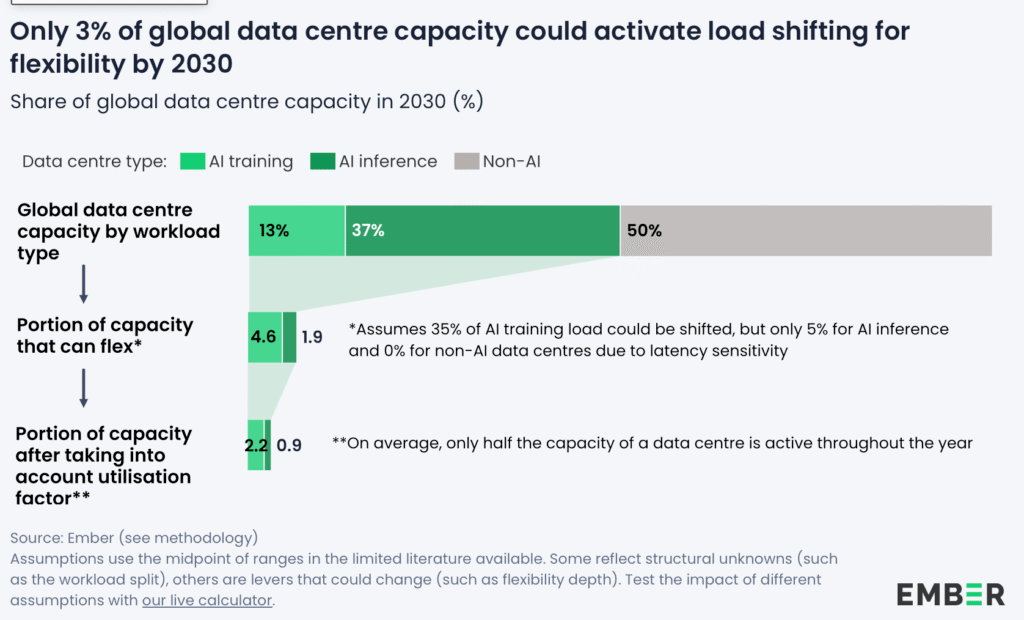
In “Data centres for grids: the potential impact of flexibility,” published October 29, Ember’s Energy Infrastructures Lead Elisabeth Cremona examines nine markets: Texas, California, New York, Ireland, the UK, Germany, Malaysia, the Philippines and Singapore. The core problem is the work data centers do. “Around 87% of global data centre capacity in 2030 is expected to run cloud services, enterprise IT and AI inference – workloads that must respond to users instantly and cannot be easily paused or moved,” Cremona writes. AI training can flex more, but it accounts for the smallest share. After adjusting for average utilization of about 48%, Ember estimates only around 3% of global data center capacity will be able to participate in load shifting by 2030. The result: peak-demand reductions of about 1.5% in Ireland and Malaysia, and just 0.1–0.6% in the other seven markets.
Onsite generation does more
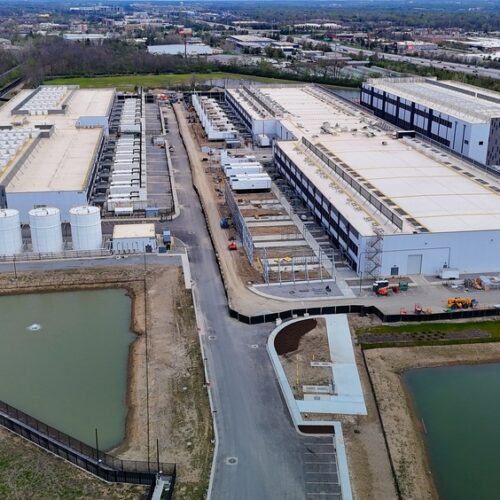
Switching to onsite generation and storage lets a data center keep computing while drawing less from the grid during stress events. In a case study of two large Texas campuses, Stargate Abilene and Comanche Circle, Ember finds onsite generation could cut grid demand “by up to 2.7 GW during peak demand hours, compared with an estimated 0.55 GW through load shifting – nearly five times as much.”
But there’s a catch. If grid operators ignore the onsite generation data centers already have when they procure capacity, Ember warns, “two sets of assets risk being built for the same demand,” which is “an unnecessary cost that could be kept off consumer bills.” The stakes are real: in PJM’s 2028–2029 capacity auction, Ember notes, data center load accounted for more than one third ($6.3 billion of $16.4 billion) of total capacity charges.
Speed to power matters
The other risk is what gets built. Developers are frequently turning to gas, Ember observes, potentially “locking in fossil fuel use even as grids decarbonise.” Gas carries practical drawbacks, too. What developers value most, Ember notes, is faster access to power, and multi-year waits for a grid connection are what push them to build their own generation in the first place.
A new data center can be built in 18 to 24 months, by Ember’s estimate, so any power source that takes longer becomes the bottleneck to construction. Yet Reuters has reported that worldwide turbine orders now top 100 GW against estimated global production capacity of 60 to 70 GW, and delivery of a gas turbine in the United States now takes six years on average. Rather than wait, some developers are scouring the world for second-hand turbines and converted jet engines.
Renewables, by contrast, are generally available for rapid deployment. “If you need power right now … solar and battery storage is one of the most economical ways to do it, and for sure the quickest,” Primergy CEO Ty Daul told Reuters, adding that a project with 500 MW of solar and 2 GWh of storage can be built in 18 to 20 months. That is about the time it takes to build the data center itself.
THE SUN DOESN’T TRANSIT HORMUZ: WHY ENERGY IMPORTERS ARE RACING TO RENEWABLES
 Energy security is redrawing the map of the energy transition. In its tenth Energy Transition Outlook, Norwegian risk management consultancy DNV finds that energy-importing countries are scaling clean energy three times faster than exporters as they seek to reduce reliance on imported oil and gas.
A widening divide
Over the past five years, DNV calculates, the share of non-fossil energy in the primary energy mix rose 2.2 percentage points across the importing regions of China, India and Europe, versus just 0.7 points across the exporting regions of the Middle East, North America and Russia. “The disruption to energy supply through the Strait of Hormuz is reinforcing governments’ determination to reduce dependence on imported oil and gas,” DNV writes. Or, as the Outlook puts it more bluntly: “the sun and wind do not transit the Strait of Hormuz.”
“Importing regions are accelerating electrification, renewables, and storage to reduce their exposure to the most insecure fossil-fuel markets,” said Ditlev Engel, CEO of Energy Systems at DNV. “Exporters, meanwhile, are responding to today’s shortages by increasing investments and production.”
The money is following. DNV reports that annual global renewables investment doubled from $860 billion in 2021 to $1,770 billion in 2026. The shock is also reshaping long-term forecasts: DNV now expects the Middle East to supply around 40% of global oil production in 2050, down from 50% in last year’s Outlook, and its sensitivity analysis finds permanent oil and gas demand destruction of 2–5% if the conflict persists to 2030.
Electrons over barrels
Other analysts see the same dynamic. Ember Senior Energy Analyst Euan Graham estimates that electric-car fleets in oil-importing countries displaced 200 million barrels of crude worth $20 billion between March and August 2026. And the S&P Global Institute finds that lower reliance on oil imports measurably softens the economic hit from oil-supply shocks.
The new dependencies
The shift carries its own risks. DNV notes that “policymakers are wary of replacing dependence on imported fossil fuels with reliance on imported cleantech equipment from concentrated supply chains.” China makes more than 80% of the world’s solar modules. Exporters outside the Middle East, meanwhile, are raising output and slowing their own transitions, and DNV still forecasts 2.3°C of warming.
The risks extend beyond the power sector. In industry, fossil fuels remain the dominant energy source, which leaves heat-hungry manufacturers exposed to the same price shocks. Energy harvested at home, and stored until it is needed, is energy no blockade can interrupt.
FOLLOW & JOIN 247Solar
Contact: info@247solar.com